How Customized Motors are Revolutionizing Precision Engineering
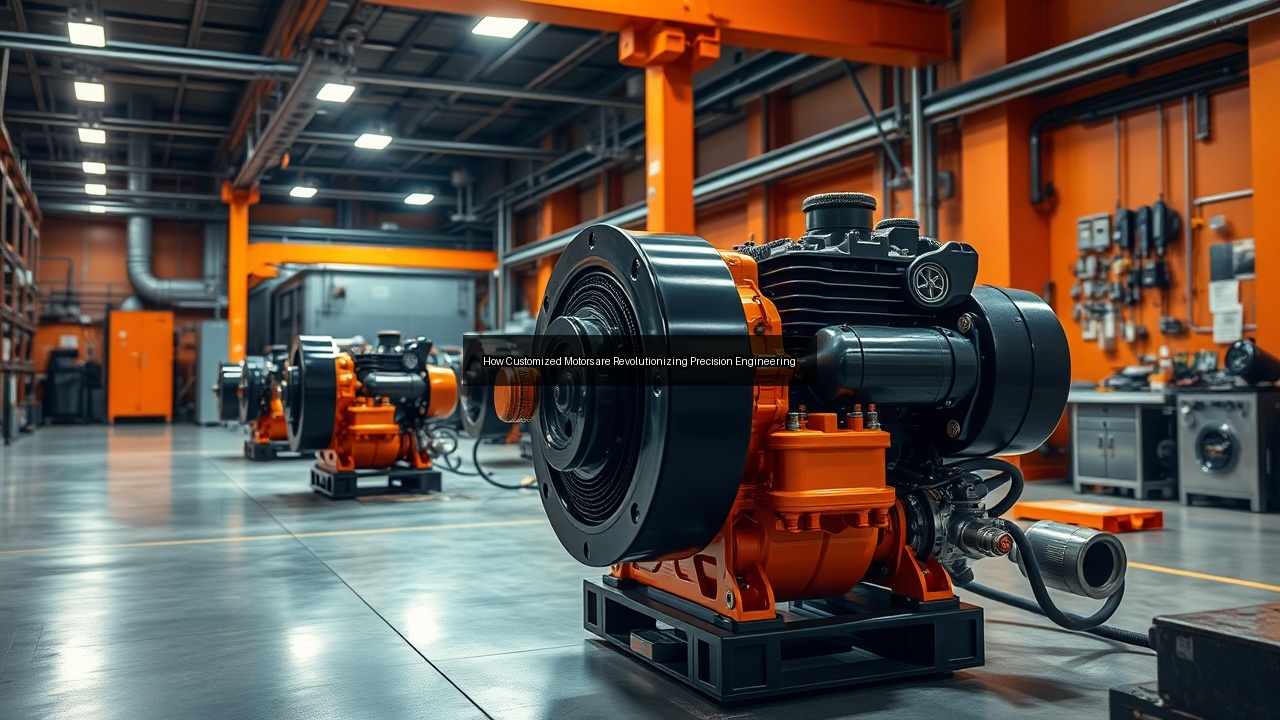
The Evolution of Custom Motors in Precision Engineering
Historical Overview of Custom Motors
Custom motors emerged as engineers sought tailored solutions beyond standard designs for demanding tasks. Early developments focused on adapting direct current systems for specialized equipment where off-the-shelf options fell short. Manufacturers quickly recognized that precision engineering required motors built to exact specifications, improving efficiency and reliability across industries. This shift allowed businesses to integrate motors directly into unique machinery setups without compromising performance.
Over decades, the demand for customized motors grew alongside advances in materials and design tools. Companies producing generators and electric motors began offering bespoke configurations to meet client needs in fields like automotive and aerospace. A custom motor could incorporate specific torque ratings or housing dimensions that standard models lacked. This approach transformed how teams approached complex projects, turning potential limitations into opportunities for innovation. Today, custom motors support everything from heavy-duty truck components to delicate laboratory instruments, reflecting their broad impact on precision work.
Key Innovations in Motor Technology
Breakthroughs in motor technology centered on refining windings, magnets, and control systems to deliver higher accuracy. Engineers introduced variable speed capabilities that let custom motors adjust output instantly based on real-time feedback. These changes boosted overall system responsiveness in precision engineering applications. New alloys reduced heat buildup, allowing motors to run longer without failure during continuous operations.
Design software now enables rapid prototyping of custom electric motor variants, cutting development time significantly. Teams test multiple configurations virtually before physical production begins. Such tools help incorporate features like integrated sensors or reinforced gears for specific loads. The result appears in enhanced durability for motors used in manufacturing lines and automated processes. Innovations continue to expand what customized motors achieve in tight tolerance environments.
The Rise of Electric Motors in Precision Engineering
Electric motors gained prominence as industries moved toward cleaner and more controllable power sources. Custom electric motor designs replaced older mechanical drives in many setups, offering precise speed regulation through electronic controls. This transition improved energy efficiency while meeting strict performance criteria in engineering projects. Manufacturers adapted alternating current and direct current platforms to fit niche requirements.
Precision engineering benefited directly as electric motors delivered consistent torque without the vibrations common in legacy systems. Custom motors integrated seamlessly into robotic arms and measurement devices. Companies developed versions optimized for low noise or high vacuum conditions. The rise accelerated adoption across sectors, with electric motors powering everything from conveyor systems in inventory warehouses to specialized tools on assembly floors. Their versatility keeps driving new standards in accuracy and repeatability.
Types of Customized Motors and Their Applications
Brushless DC Motors in Modern Machinery
Brushless dc motors excel in applications needing high efficiency and minimal maintenance. Without brushes to wear out, these units provide longer service life in continuous-duty cycles. Custom motors based on brushless dc technology often include tailored winding patterns and magnet placements for exact speed profiles. Engineers specify them for equipment where heat management and compact size matter most.
Modern machinery in packaging and textile production relies on these motors for smooth operation. A custom motor version can match precise voltage requirements or mounting configurations unavailable in catalog products. Brushless dc designs also support advanced commutation methods that enhance response times. Their quiet performance suits environments sensitive to sound, while high power density allows smaller footprints without sacrificing output. Manufacturers value the reliability these motors bring to precision tasks.
Synchronous Motors for Precision Tasks
Synchronous motors maintain constant speed regardless of load variations, making them ideal for timing-critical operations. Custom motors in this category feature adjustable pole counts and rotor designs that align perfectly with application demands. Engineers use them where phase accuracy prevents errors in processes like material handling or printing.
Industries integrate synchronous motors into systems requiring lockstep movement with other components. A customized motor might incorporate specific gear ratios or encoder interfaces for feedback loops. These motors operate efficiently on alternating current supplies and deliver strong starting torque when properly engineered. Their stability supports high-precision work in calibration equipment and scientific instruments. Customization ensures the motor fits existing frames while meeting unique electrical characteristics.
Induction Motors in Industrial Settings
Induction motors power many industrial machines due to their simple construction and robust nature. Customized motors of this type allow adjustments to rotor bars or stator slots for optimized slip characteristics. Facilities choose them for heavy loads where durability outweighs complexity in control systems.
Induction motors handle varying frequencies well when paired with drives, supporting flexible production speeds. Custom electric motor builds often add reinforced bearings or special enclosures for harsh environments like foundries. They prove cost-effective for large-scale manufacturing while delivering adequate precision through external controls. Applications range from pumps in processing plants to fans in climate systems. Tailored induction motors reduce downtime by matching exact operational parameters.
Servo Motor for Robotics and Automation
Servo motor units provide closed-loop control essential for robotic positioning and automation sequences. Custom motors in servo configurations include high-resolution encoders and low-inertia rotors for rapid acceleration. Developers specify torque curves and feedback resolutions to match robotic joint requirements precisely.
Automation lines depend on servo motor performance for repeatable movements in assembly and inspection. A custom motor design might integrate planetary gear sets or liquid cooling channels to sustain high duty cycles. These motors excel when paired with controllers that fine-tune velocity and position in real time. Their precision supports collaborative robots working alongside humans in manufacturing cells. Customization expands servo capabilities into specialized tasks like micro-assembly or high-speed sorting.
The Role of Customized Motors in Manufacturing
Streamlining Production Processes
Custom motors accelerate production by matching exact power and speed needs of each station. Engineers replace generic drives with tailored units that eliminate bottlenecks in material flow. This optimization reduces cycle times and energy waste across assembly operations. Manufacturing teams report smoother throughput when motors align perfectly with machine kinematics.
Production lines benefit from motors designed for quick integration and minimal recalibration. Custom electric motor solutions often include modular connectors that speed installation during upgrades. The result appears in higher output rates without added complexity. Facilities using these motors achieve consistent quality because each drive delivers predictable performance under load. Streamlined processes lower overall operating costs while raising reliability standards in precision engineering environments.
Inventory Management with Custom Motors
Inventory systems gain accuracy when automated storage and retrieval equipment uses custom motors. These units power conveyors and lifts with precise positioning that prevents miscounts or jams. Facilities track stock levels more reliably because motor-driven mechanisms respond instantly to control signals.
Custom motors support variable load handling in warehouses, from light totes to heavy pallets. Tailored designs incorporate encoders for real-time location feedback during movement. This capability integrates with software that updates inventory databases automatically. Reduced errors translate to lower holding costs and faster order fulfillment. Manufacturers value how custom motor implementations keep storage operations aligned with broader production schedules.
Integrating Custom Electric Motors into Existing Systems
Retrofitting older equipment becomes feasible when engineers specify custom electric motor replacements. These motors match legacy mounting dimensions and electrical interfaces while adding modern efficiency features. Facilities avoid full line replacements by adapting new drives to current frames and controls.
Integration succeeds through careful analysis of torque, speed, and thermal requirements. Custom motors often include adapters for gear couplings or shaft extensions that preserve original kinematics. Teams complete upgrades during scheduled maintenance windows with minimal disruption. The approach extends equipment life and improves energy use in established manufacturing plants. Precision engineering projects frequently rely on such targeted motor swaps to meet updated performance goals.
Challenges and Solutions in Custom Motor Manufacturing
Addressing Design Constraints
Design constraints arise from space limits, thermal budgets, and material availability during custom motor development. Engineers balance competing factors like weight reduction against required torque output. Solutions involve advanced simulation tools that model electromagnetic and mechanical stresses before prototypes are built.
Collaboration between clients and motor specialists clarifies priorities early, guiding material selections and winding techniques. Custom motors overcome size restrictions through optimized lamination stacks or rare-earth magnet placements. Thermal management improves with integrated cooling channels or external fins tailored to the application. These strategies deliver functional designs that satisfy all constraints without excessive cost increases. Precision engineering teams gain reliable components despite tight specifications.
Quality Control in Custom Motor Production
Quality control ensures every custom motor meets performance benchmarks through rigorous testing protocols. Manufacturers run endurance trials, vibration analysis, and electrical verification on each unit. Data logs confirm consistency across production batches before shipment.
Process controls track critical dimensions and material properties from raw components onward. Custom motors undergo load testing that simulates actual operating conditions in the target environment. Failures trigger root-cause investigations that refine subsequent builds. This disciplined approach minimizes field issues and supports long-term reliability in precision applications. Customers receive documentation verifying compliance with agreed parameters.
Future Trends in Motor Customization
Future trends point toward greater use of additive manufacturing for motor components and embedded intelligence for self-diagnostics. Custom motors will incorporate more sensors that feed performance data directly to cloud platforms. These features enable predictive maintenance that reduces unplanned stops in manufacturing.
Advances in magnet materials and power electronics will allow smaller, more efficient designs for demanding precision engineering roles. Truck fleets and industrial robots alike stand to gain from motors optimized for specific duty cycles. Customization processes will shorten further with digital twins that validate designs virtually. The trajectory promises continued expansion of what customized motors achieve across sectors.